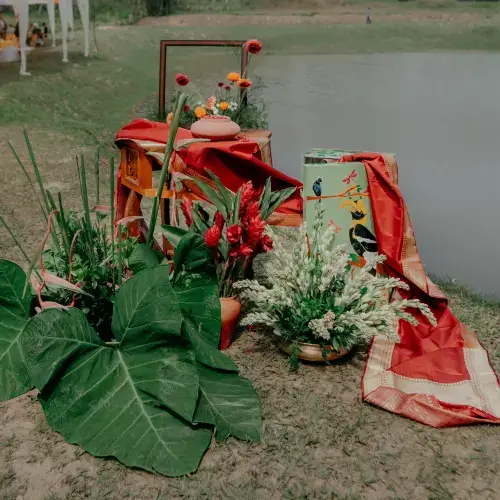


Stop us if this sounds familiar.
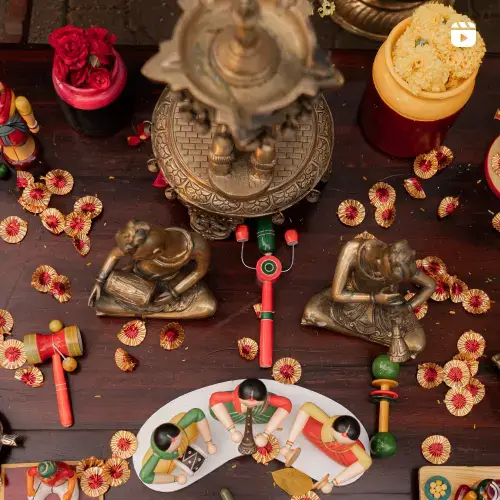
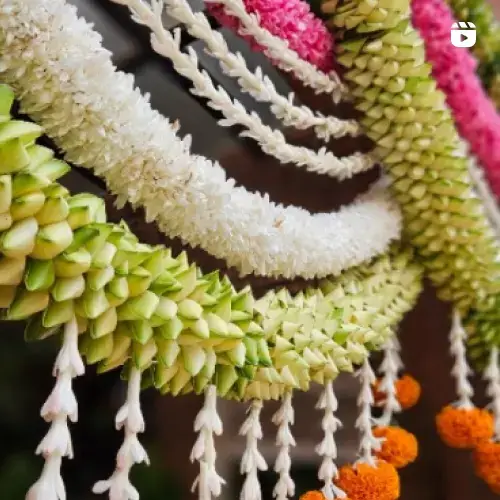
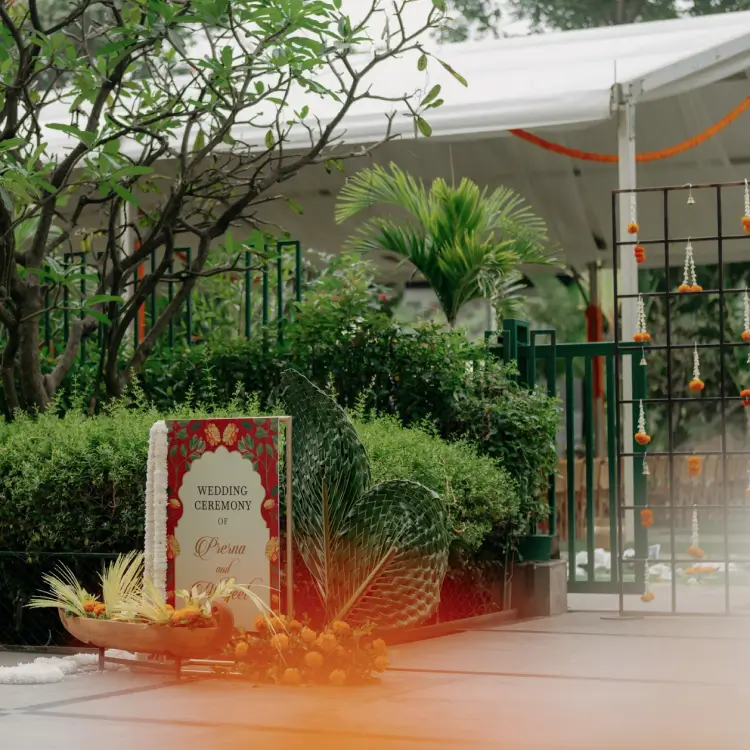
You’re scrolling through wedding inspiration. Every other image? Drenched in genda phool. From mandap ceilings to mehendi backdrops, to mounds of marigold heaped artfully on brass plates—it’s everywhere. And a small part of you wonders, “Is this too done? Too expected? Too safe?”
We get it.
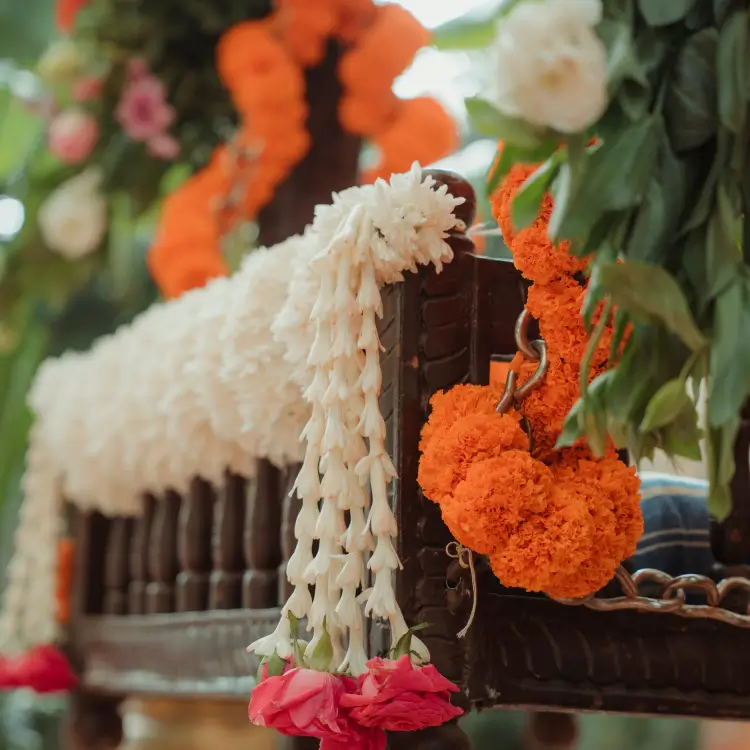
But here’s the thing: some flowers are everywhere because they’ve earned their spot. Marigolds aren’t just flowers. It’s the smell of Diwali mornings. The splash of colour outside your ajji’s house. The first thing you spot walking into a temple. It’s familiar, festive, and full of feeling.
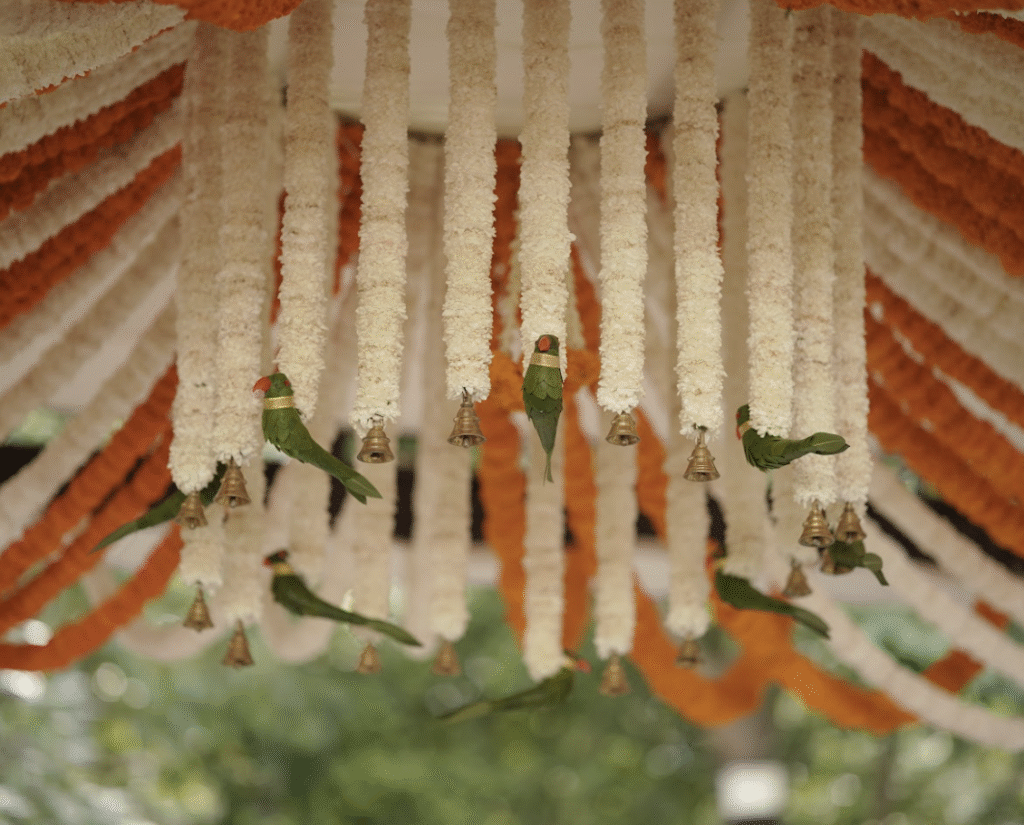
Images Courtesy: shutterbugfilmcompany
And if you ask us? It still has plenty left to offer.
We’ve planned weddings across styles, budgets, and regions—and if there’s one floral element that always delivers, it’s Genda Phool. North Indian, South Indian, intimate backyard haldi or large-scale mandap setup—marigold always fits. It doesn’t just look good. It feels right. Warm, vibrant, grounded. Whether you’re going full-tradition or mixing things up, this little flower shows up and does the job beautifully.
Here’s why we still reach for it. And why you might want to, too.
Some Flowers Are Just Built for Weddings
Call it Genda Phool, Samanthi, Chamanthi, or Banthi—marigold isn’t just another bloom. It’s built for celebrations. Especially the kind that come with 5am wake-up calls, last-minute decor swaps, and guests who love to hug the centrepieces.

Image Courtesy: Livingstone Reynold Photography
There’s a reason it’s everywhere. From thamboolam trays to mandap pillars, marigold holds its own—visually, texturally, and emotionally. It brings warmth without trying, colour without clashing, and an earthy fragrance that lingers in the best way. It feels festive the second it enters the room.
And it works hard, really hard. It stays fresh through long ceremonies, doesn’t fuss over weather, and doesn’t need constant fluffing or fixing. We’ve looped it into swings, draped it from ceilings, floating in Urlis, and even styled entire stages with it—and it’s never let us down.

Images Courtesy: shutterbugfilmcompany
Some flowers are delicate, dramatic, or seasonal. This one? It shows up, does the job beautifully, and sticks around long after the photos are taken. Built for weddings. And built to last.
Affordable, Available, and Surprisingly Low-Maintenance
Here’s something couples are often surprised to learn: marigold is one of the few flowers that’s always in season.
Grown across the country year-round, it’s easy to source—whether you’re in Coorg, Chennai, or Chhattisgarh. You don’t need to airlift it in or worry about a florist’s panic attack the night before. And because it’s hardy, it doesn’t wilt under sun, humidity, or hours of ceremonies.

Images Courtesy: shutterbugfilmcompany
This also makes it budget-friendly without ever looking cheap. Whether you need a few garlands for thamboolam trays or a thousand blooms to build out an entrance tunnel, marigold shows up strong—and leaves you with a little extra wiggle room in the decor budget.
Put simply: it’s a flower that understands the assignment.
It’s Traditional—but Never Tired
If you think tradition means boring, Genda Phool will prove you wrong.
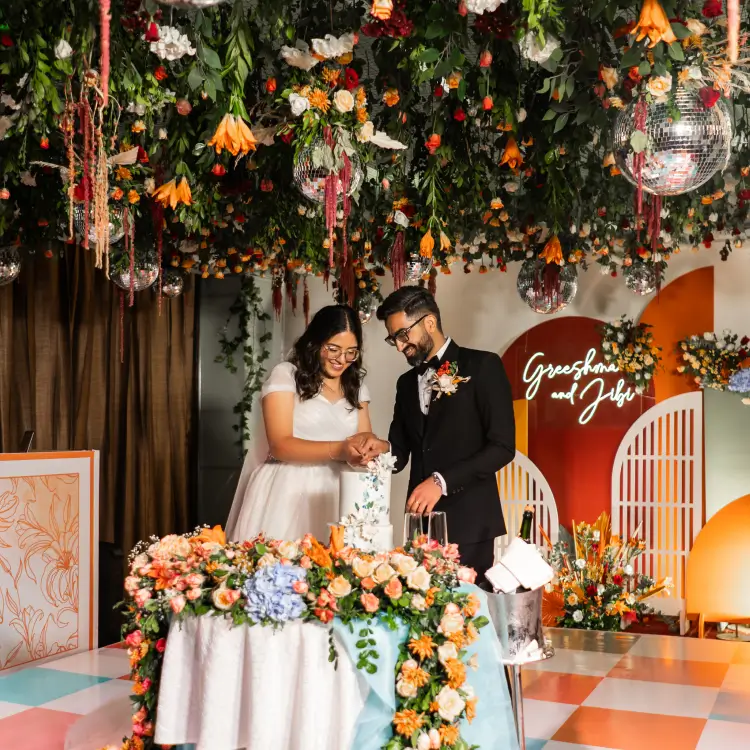
Yes, it’s steeped in ritual, but it’s also wildly versatile. Over the years, we’ve styled it into floral jewellery, mixed it into floating centrepieces, and even paired it with neon signs for a mehendi that felt halfway between Madurai and Miami.
It plays well with others, greenery, roses, even pampas, but it also holds its own. We’ve created entire mandaps using only Marigold, and not one guest missed the fancy florals.
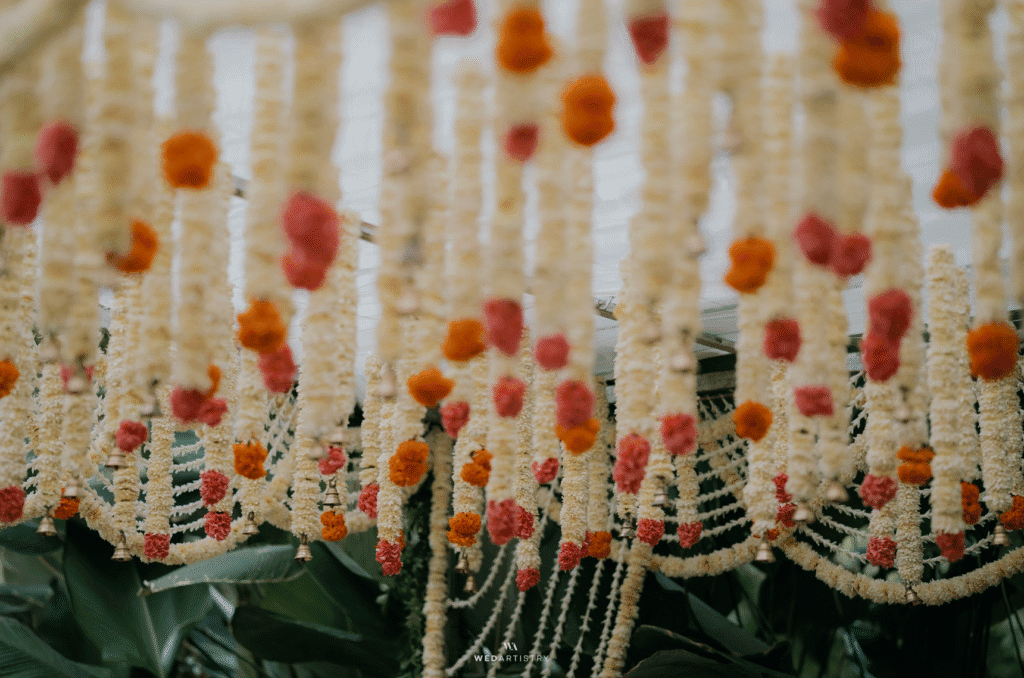
Images Courtesy: WedArtistry
What makes it fun is how easily it shifts tone. Want something minimal? Go for tight garlands and structured torans. Want drama? Layer it up, throw in brass elements, add depth with yellow and orange gradients.
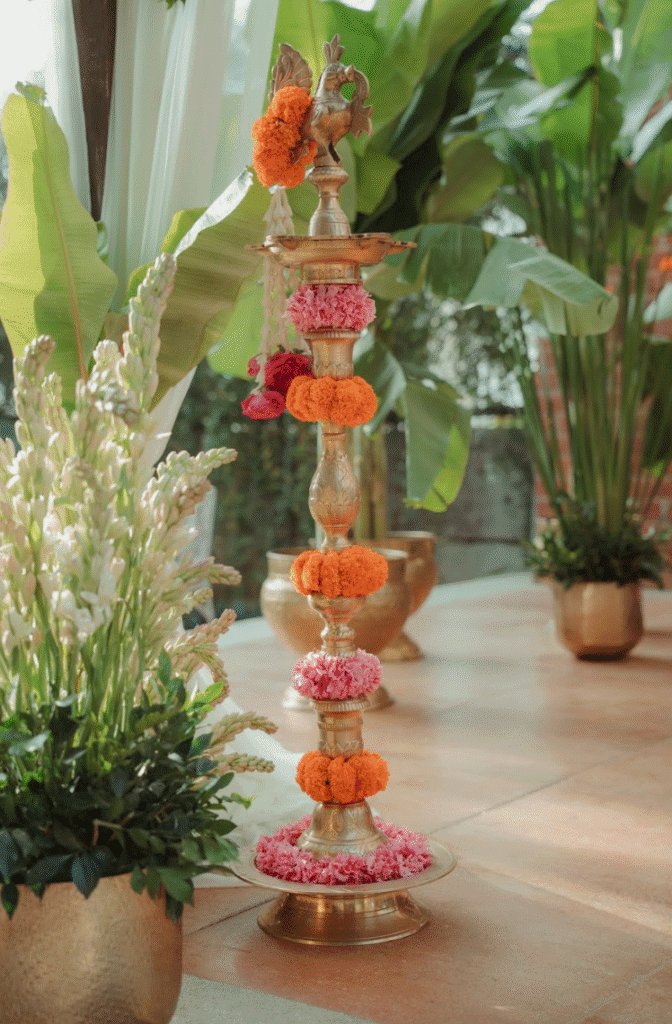
Images Courtesy: Livingstone Reynold Photography
It adapts. And more importantly—it elevates.
Try picturing a Haldi ceremony without Marigold, It’s almost impossible.
Whether it’s a backyard Haldi with just family or a full-blown Mehendi at a beach resort, Marigold is the go to decor. Draped across walls, strung into ceiling installations, wrapped around swings—it brings the kind of brightness that feels tailor-made for celebration.
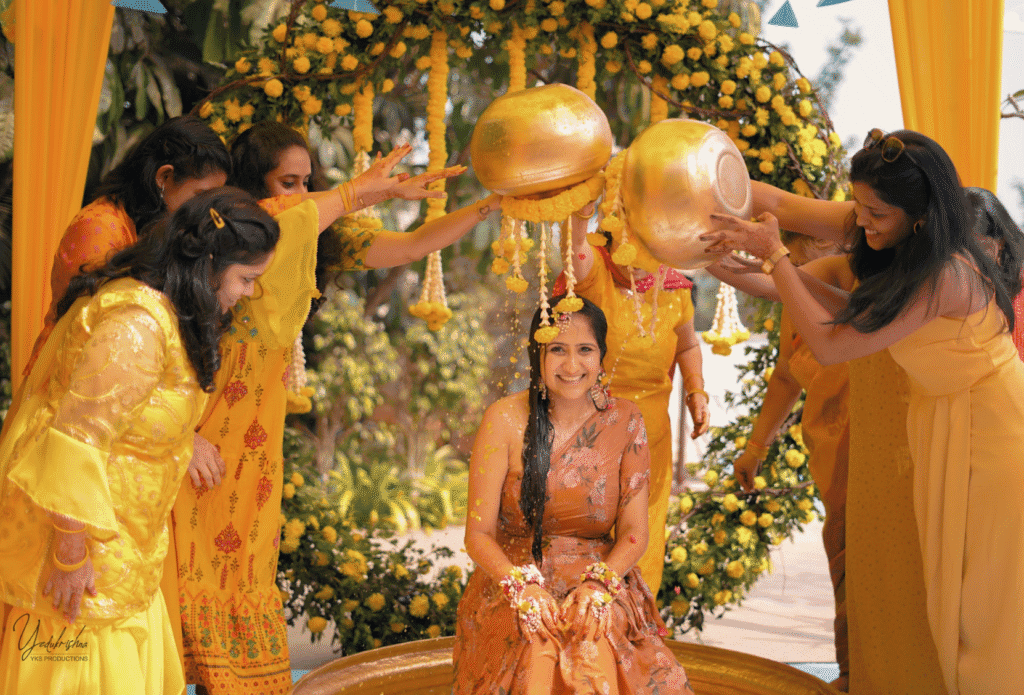
Images Courtesy: YKS Photography
And it’s not just regional—it’s universal. Across both North and South Indian weddings, Genda Phool plays the part perfectly. It pops beautifully against turmeric-streaked cheeks, complements every outfit (yes, even neon green), and fills a space with warmth without ever feeling overdone.
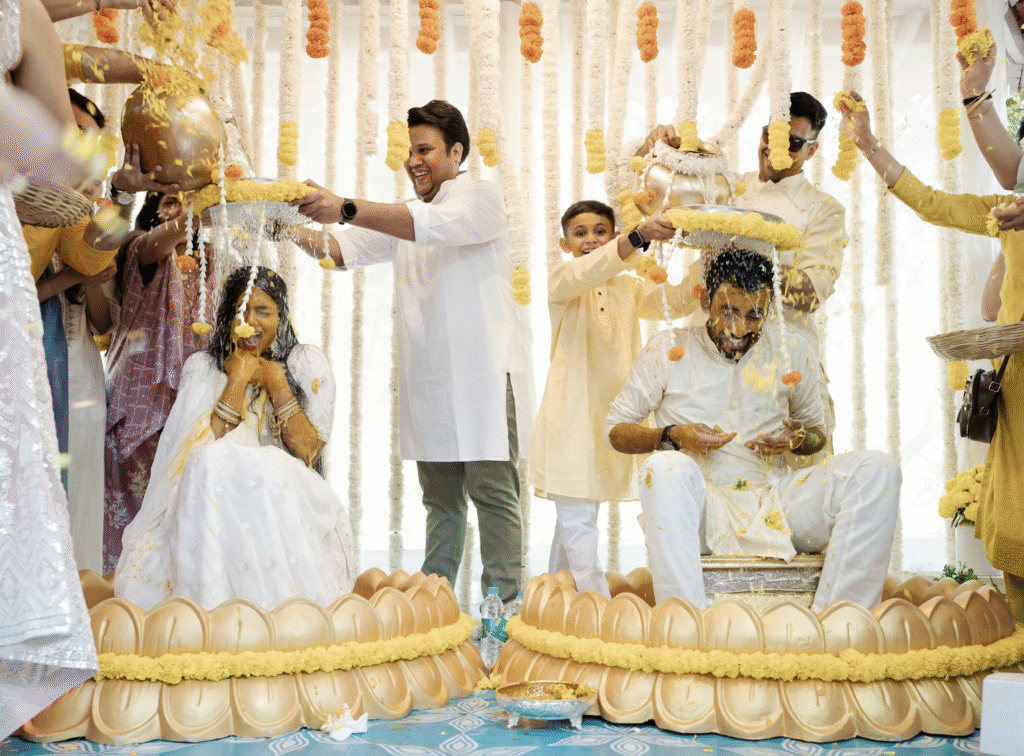
Images Courtesy: Wedding Theory
The South Indian Standard That Never Misses
In South Indian weddings, marigold isn’t just a flower—They represent prosperity, good fortune, and a long-lasting marriage

Images Courtesy: shutterbugfilmcompany
From welcoming deities at the temple entrance to decorating the path to the mandap, marigold carries centuries of symbolism. Its colours—yellow, orange and mahogany—are believed to invoke energy, purity, and spiritual clarity. It’s a staple on wedding garlands, and doorway Toranams.
But even with its traditional roots, it never feels outdated. Whether we’re working on a heritage temple wedding or a sleek resort setup, marigold fits right in. It has this rare ability to feel sacred without being solemn, and festive without being flashy.
That’s what makes it so enduring—it belongs to everyone, everywhere.
So Why Does It Still Work?
Because some things don’t need reinvention.
Marigold isn’t just a floral choice—it’s part of the emotional architecture of Indian weddings. Whether it’s genda phool strung across a North Indian mehendi or samanthi flowers wrapped around mandap pillars in a Tamil or Telugu ceremony, it shows up with the same sense of joy and familiarity.
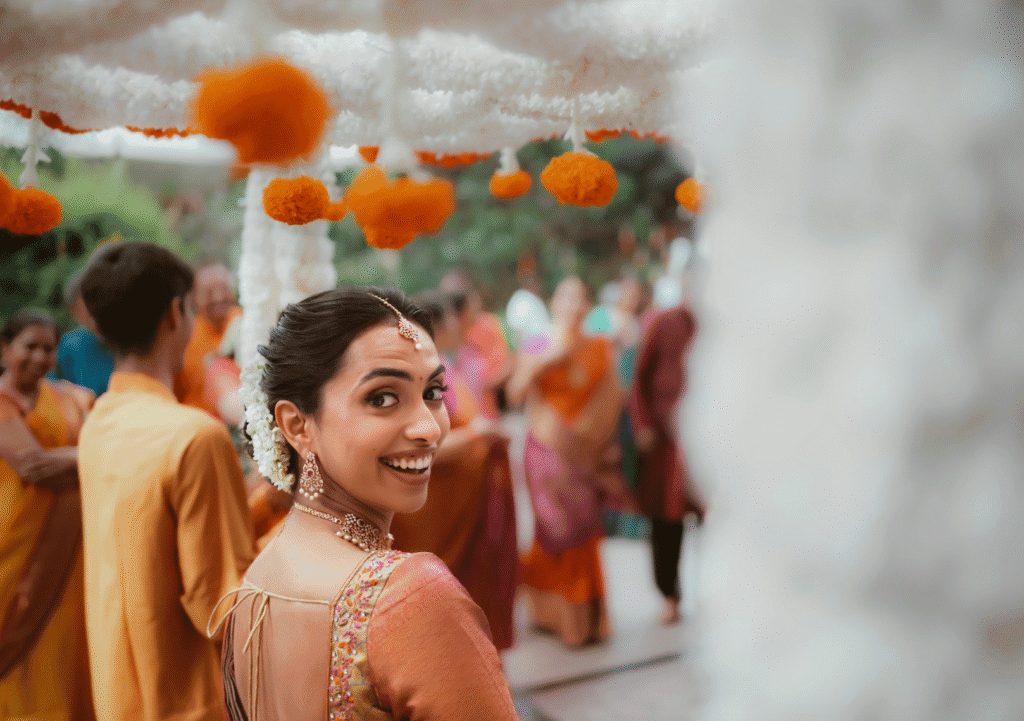
Images Courtesy: shutterbugfilmcompany
It brings memory, colour, texture—and a warmth that no imported bloom can quite replicate. Big weddings or small, rooftop or temple, North or South—it always fits. Effortlessly.
And that’s the thing about true icons. They don’t follow trends. They set the tone.